Robots Are Coming to the Print Floor. Here's the Honest Read.
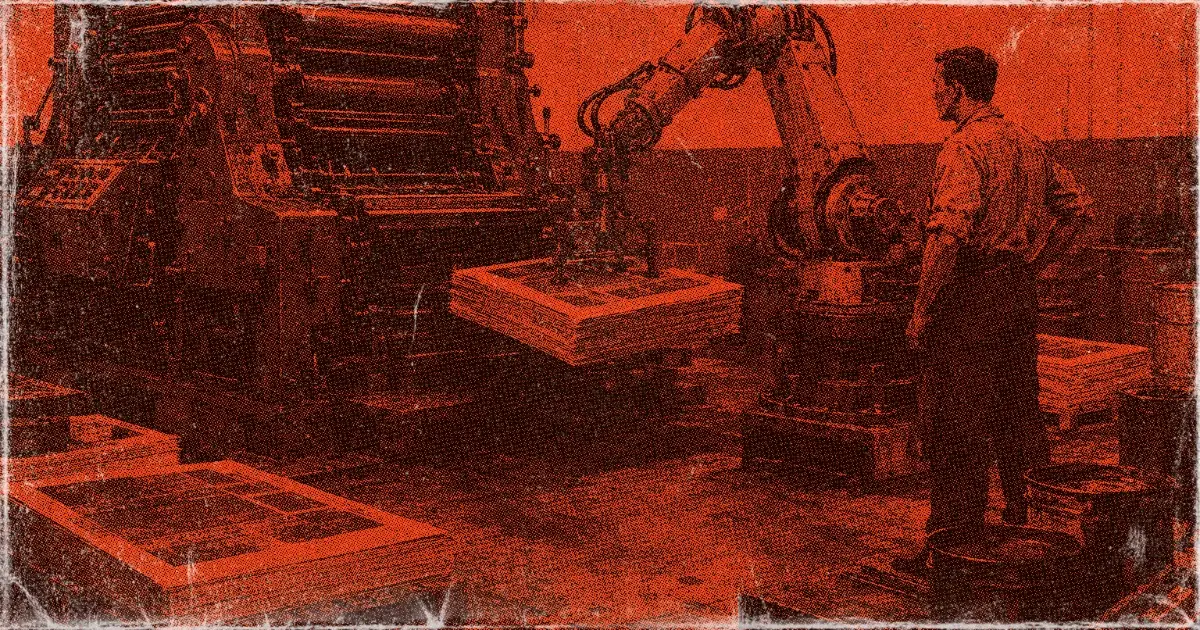
Print has a people problem. Not enough hands, and the ones who know the work are aging out. So the industry is doing what every industry does when it runs short on labor. It's bringing in machines.
2026 is the year the robots stop being a science fair project and start showing up on real production floors. Not the AI everyone argues about online. Actual robots. Arms loading and unloading presses. Autonomous carts hauling pallets from receiving to finishing to shipping. The stuff print can't automate with software, because print is physical. The paper has to move. Somebody, or something, has to move it.
The reason is simple math. Costs are up, workers are short, and clients want it faster and around the clock. A machine doesn't take a lunch or call in sick. Industry forecasters are calling this the foundation year for "lights-out" printing, where a shop runs a shift with almost nobody in the building.
I'll be straight about what that means and what it doesn't.
For the big production houses, this is real and it's coming fast. If your job is feeding a press or stacking a pallet, the floor is changing under you. That's not fear-mongering, it's just where the money's pointed. Nearly 80% of print shops have already automated part of their workflow. The next step is automating the muscle, not just the software.
For a small shop like mine, the picture's different. I'm not buying a robot arm to run a batch of business cards. The trade vendors will automate their plants, and that's mostly good for me. Cleaner runs, faster turns, fewer mistakes that come from a tired hand at 2am. The reports back it up. Shops moving to automated inkjet are seeing around 9% less paper waste and 8% better margins. When the vendor runs leaner, my cost to get you a clean job goes down.
Here's the part that matters if you hire a printer or design for print.
The machine handles the muscle. It does not handle the judgment. It doesn't know your brand should run warmer than the file says. It doesn't catch that the client's logo is going to muddy up on uncoated stock. It doesn't know that a halftone built for paper will plug up on a tee. That's still a person. That's still the part you're actually paying for.
So I'm not worried about robots taking the craft. I'm watching them take the grunt work, and honestly, good. Let the machine haul the pallets. Let it run the press overnight. The value was never in the lifting. It was in knowing what good looks like and how to get ink to land that way on real material.
The shops that survive this aren't the ones with the most robots. They're the ones who still know the trade well enough to tell the machine what right looks like.
← Back to the Journal